Revolt of 1857
The Story
In 1857, sepoys — Indian soldiers in the British Company's army — heard a shocking rumour: that the grease on their new rifle cartridges was made from cow and pig fat. Biting these cartridges would offend both Hindus and Muslims.
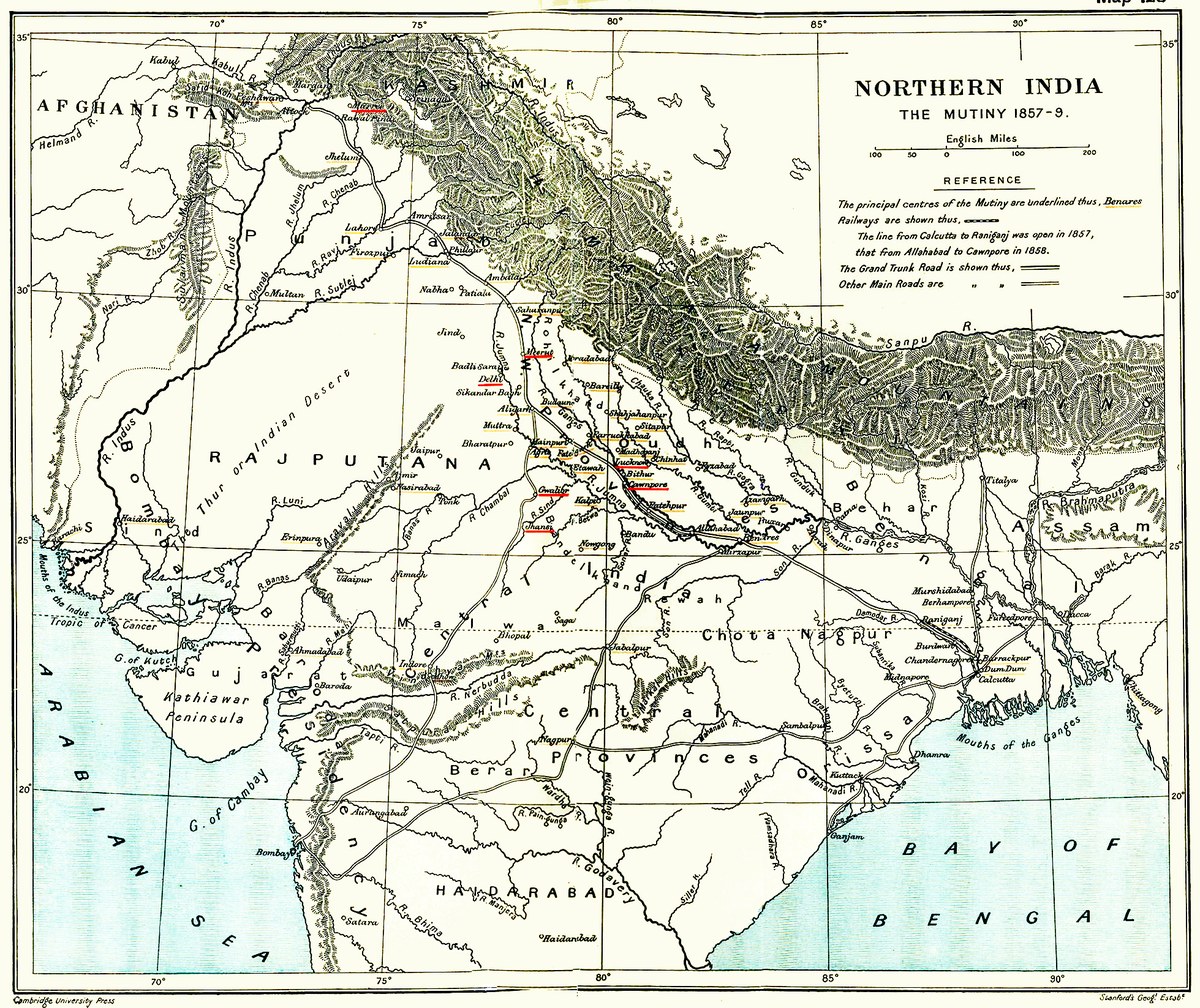
When soldiers at Meerut refused, they were harshly punished, and the anger exploded. The spark spread from Meerut to Delhi, Lucknow, Jhansi and many other places.
Kings, queens, farmers and craftspeople all joined together against British rule. Many people call this uprising India's First War of Independence.
The Revolt of 1857 began on 10 May at Meerut when Indian sepoys of the East India Company army mutinied against their British officers. Within days the rebels marched to Delhi and proclaimed the old Mughal emperor Bahadur Shah Zafar as their leader.
The uprising quickly spread across northern and central India, including Kanpur, Lucknow, Jhansi and parts of Bihar and Madhya Pradesh.
The reasons were many: unfair land settlements, the annexation of Indian states through policies like the Doctrine of Lapse, disrespect for Indian religions and traditions, and the immediate anger over the greased cartridges. Leaders like Rani Lakshmibai of Jhansi, Tantia Tope, Nana Sahib, Kunwar Singh and Begum Hazrat Mahal led local revolts, while thousands of peasants, artisans and disbanded soldiers joined in.
The uprising was crushed by 1858 with great brutality. As a result, the Government of India Act 1858 ended the East India Company's rule and placed India directly under the British Crown, beginning the era known as the British Raj.
Learn More
These links go to other websites — ask a grown-up before tapping.