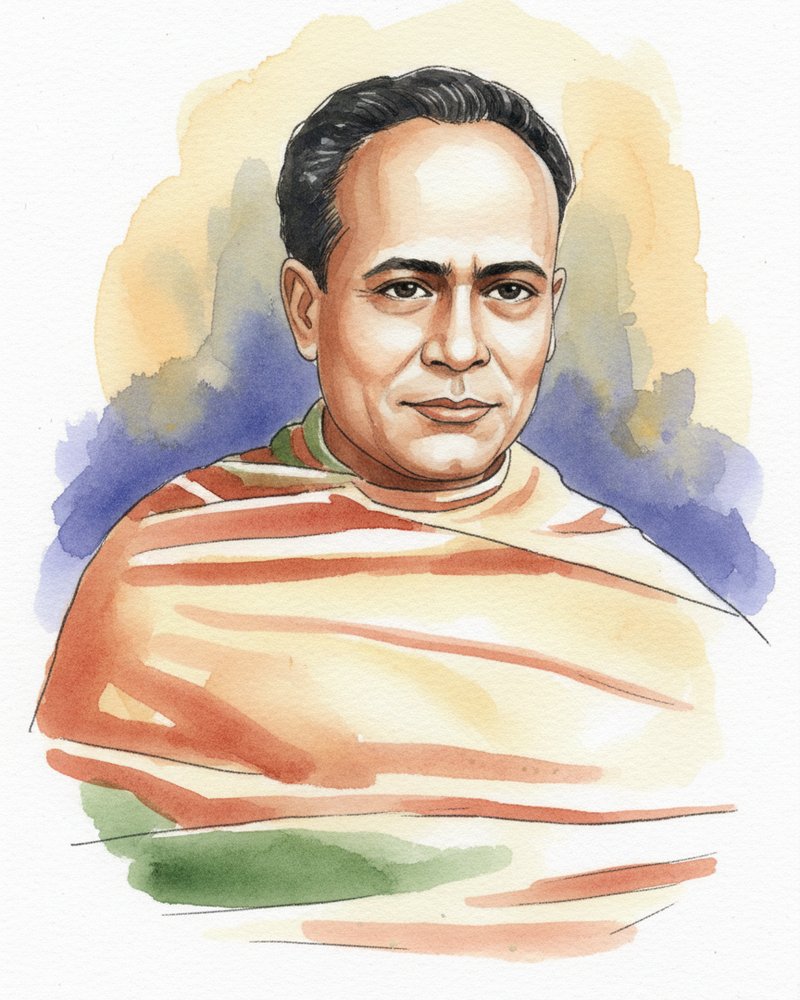
Original illustration for Bharat Legends.
Ishwar Chandra Vidyasagar
- ◆Wrote 'Barnaparichay' Bengali primer
- ◆Drove the Widow Remarriage Act, 1856
- ◆Founded the Metropolitan Institution
The Story
Ishwar Chandra was so full of knowledge that people gave him the title Vidyasagar, which means 'ocean of learning'. As a poor boy he learned to read under street lamps because his home had no lamp of its own.
He grew up to write the very first Bengali alphabet book for children, called Barnaparichay — which Bengali kids still learn from today. He also fought hard to change the law so that widows could marry again and start a new life.
Ishwar Chandra Vidyasagar was born in 1820 in a poor family in Birsingha, Bengal. He walked long distances to Calcutta as a boy to study, often reading beneath street lamps because his family could not afford oil for a lamp at home.
He mastered Sanskrit at the Sanskrit College and later became its principal.
He was a great educator: he opened schools for girls across Bengal, made Sanskrit learning available to non-Brahmins, and wrote Barnaparichay, a two-part Bengali primer that has taught generations of children to read. His most famous reform was the Hindu Widows' Remarriage Act of 1856, which he pushed for over many years and which finally allowed Hindu widows to remarry legally.
He was also known for his personal kindness — he often spent his own money to help poor students, widows and struggling families. He is one of the towering figures of the Bengal Renaissance.
Learn More
These links go to other websites — ask a grown-up before tapping.