The Green Revolution
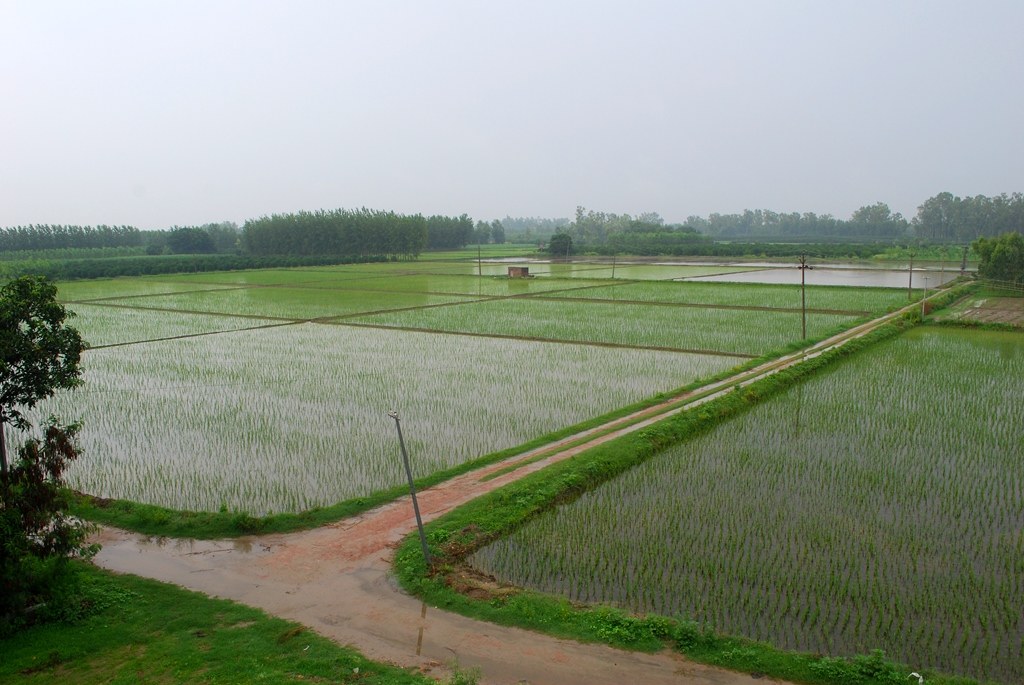
Symbolic image — a map or later illustration, not a photograph of the event. Image via Wikimedia Commons — Punjab monsoon fields.
The Story
In the 1960s, India often did not have enough food, and many people went hungry. A quiet, patient scientist named M.
S. Swaminathan worked closely with farmers in Punjab, Haryana and western Uttar Pradesh.
Together they planted a new kind of wheat that grew tall and heavy with grain, along with better rice varieties. Combined with more irrigation and fertiliser, this changed things dramatically.
In just a few years, India's storerooms began to fill up with its own grain. This big change is known as the Green Revolution.
The Green Revolution began in India in the mid-1960s at a time of serious food shortages. Under the leadership of the scientist M.
S. Swaminathan, and with the help of high-yielding wheat varieties developed in Mexico by Norman Borlaug, Indian agriculture was transformed within a decade.
The programme combined new dwarf wheat and rice seeds with more irrigation from canals and tube wells, chemical fertilisers, pesticides and easier farm credit. States like Punjab, Haryana and western Uttar Pradesh saw yields per acre rise sharply.
By the mid-1970s India had moved from being a large importer of food grain to being largely self-sufficient. The Green Revolution helped avoid famine and boosted rural incomes for many farmers.
Over time, it also raised concerns about groundwater depletion, soil health, chemical use and unequal benefits across regions. These debates continue today as India works to build a more sustainable agriculture.
Learn More
These links go to other websites — ask a grown-up before tapping.