Independence & Partition
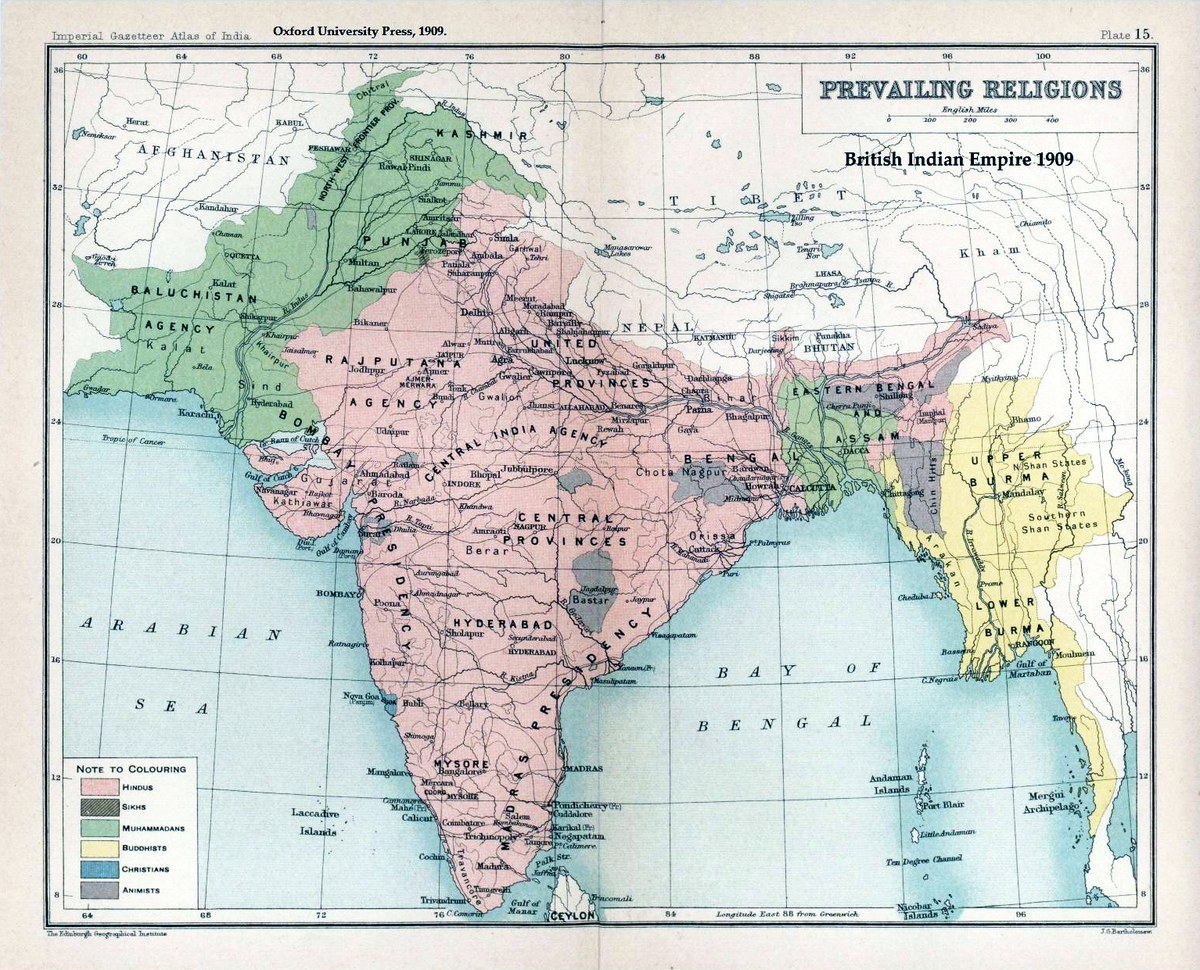
Symbolic image — a map or later illustration, not a photograph of the event. Image via Wikimedia Commons — religious majorities of British India, 1909.
The Story
On the night of 14 August 1947, as the clock ticked towards midnight, Jawaharlal Nehru stood in the Indian Parliament and gave a beautiful speech about India's 'tryst with destiny'. At the stroke of midnight, on 15 August 1947, India became free.
The tricolour was raised, songs were sung, and people danced in the streets. But the joy was mixed with sadness.
British India was divided into two new countries — India and Pakistan — and millions of people had to leave their old homes and travel long, painful journeys to their new ones.
The Indian Independence Act, passed by the British Parliament in July 1947, transferred power on 15 August 1947 and created two new dominions: India and Pakistan. In his 'Tryst with Destiny' speech in Parliament, Jawaharlal Nehru declared that at the stroke of midnight, India would 'awake to life and freedom'.
Sardar Patel began the huge job of integrating over 560 princely states into the new Indian Union.
The joy of freedom, however, was shadowed by Partition. The boundary lines, drawn in weeks by a British lawyer named Cyril Radcliffe, cut through Punjab and Bengal.
An estimated 10 to 20 million people crossed the new borders in one of the largest and most tragic mass migrations in history, and up to a million people died in the violence that followed. Mahatma Gandhi refused to celebrate and spent Independence Day in Bengal working for peace between Hindus and Muslims.
India adopted its Constitution on 26 January 1950 and became a republic, a day now celebrated every year as Republic Day.
Learn More
These links go to other websites — ask a grown-up before tapping.