The Gupta Golden Age
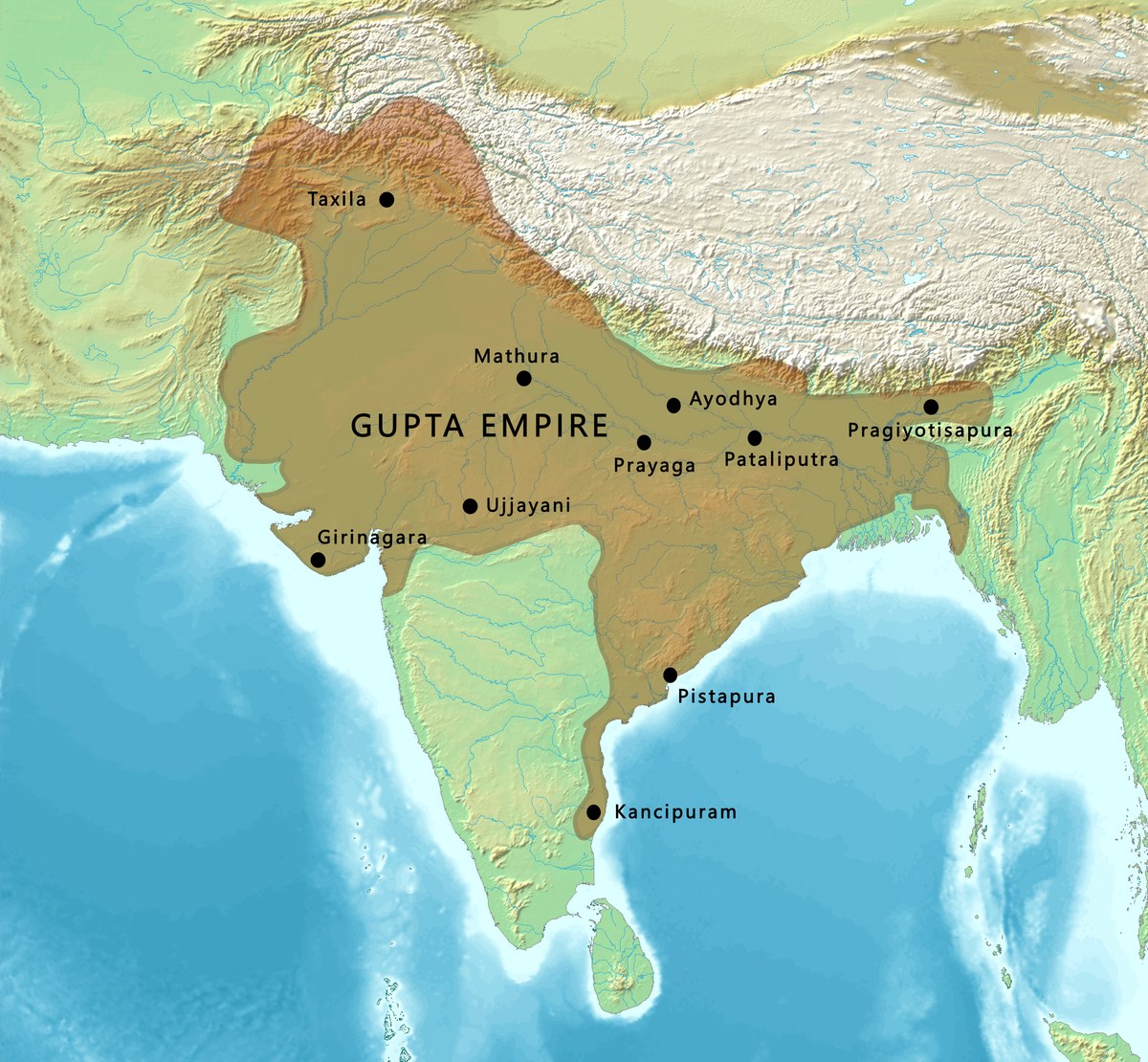
Symbolic image — a map or later illustration, not a photograph of the event. Image via Wikimedia Commons — map of the Gupta Empire.
The Story
During the time of the Gupta kings, from about 319 to 550 CE, India seemed to shine like gold. Aryabhata, a young mathematician, calculated the value of pi and said the Earth spins on its own axis.
Kalidasa, a poet in the royal court, wrote plays and poems about clouds, seasons and lovers that people still read today. Doctors like Sushruta and Charaka wrote medical books, sculptors carved beautiful stone temples, and traders sold Indian cotton, spices and ideas all the way to Rome and Southeast Asia.
The Imperial Gupta dynasty (c. 319–550 CE) presided over what is often called the Golden Age of ancient India. The Guptas ruled from Pataliputra and, at their peak under rulers like Chandragupta II Vikramaditya, controlled much of north and central India while forming alliances further south.
This was a period of extraordinary achievement in science, art and literature. Aryabhata explained the rotation of the Earth, calculated pi and worked out sines that shaped later mathematics.
The decimal place-value system, developed here, would travel through the Arab world to Europe and become the number system we all use. Kalidasa wrote in Sanskrit at Ujjain, giving us plays like 'Abhijnanashakuntalam' and poems like 'Meghaduta'.
The early rock-cut art of Ajanta and the classical style of Hindu temple architecture also blossomed. The Chinese Buddhist pilgrim Faxian, travelling in India at this time, wrote about a peaceful, well-run country.
This age set the foundation of much of what we call classical Indian culture.
Learn More
These links go to other websites — ask a grown-up before tapping.