Quit India Movement
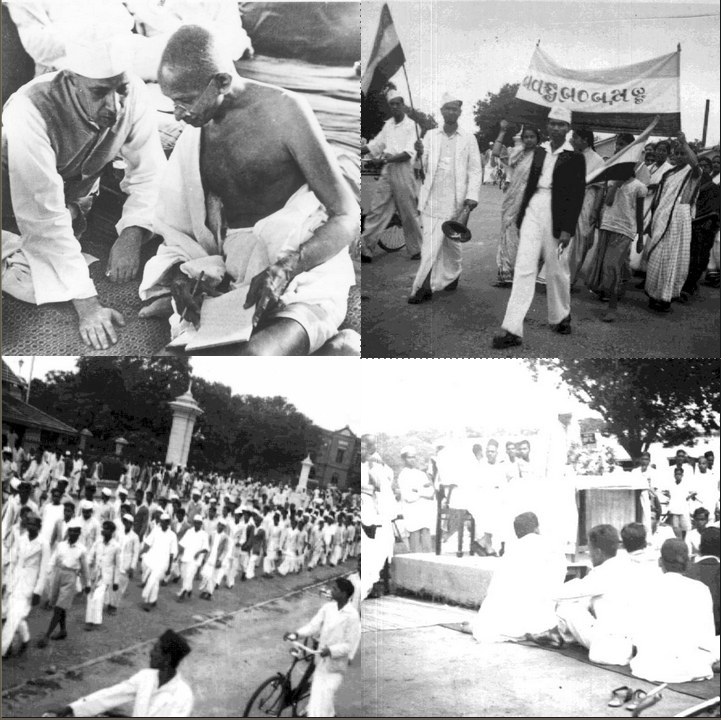
Symbolic image — a map or later illustration, not a photograph of the event. Image via Wikimedia Commons — Quit India Movement collage.
The Story
On 8 August 1942, in the middle of the Second World War, Gandhiji stood before Congress leaders in Bombay and said clearly to the British: 'Quit India.' Then, turning to his own people, he gave a fiery call: 'Karo ya maro' — 'Do or die'. Within hours the British arrested Gandhi and almost every top Congress leader.
But ordinary Indians — students, farmers, factory workers, women — carried the movement forward on their own, in villages, streets and forests, all over the country.
On 8 August 1942, the All-India Congress Committee met in Bombay and passed the Quit India resolution, demanding an immediate end to British rule in India. Gandhi gave his famous 'Do or die' speech that evening.
The next morning, on 9 August 1942, the British arrested Gandhi, Nehru, Patel, Maulana Azad and almost the entire top leadership of the Congress.
With the main leaders in jail, the movement was carried on from below by younger and lesser-known activists. Aruna Asaf Ali hoisted the Indian flag at Gowalia Tank Maidan in Bombay.
Jayaprakash Narayan, Ram Manohar Lohia and other socialists went underground and organised parallel networks. In many places local groups, sometimes called 'parallel governments', took over post offices, courts and even railway stations, especially in places like Satara in Maharashtra, Ballia in Uttar Pradesh, and Tamluk in Bengal.
The movement was suppressed with over 100,000 arrests, but it made clear to the world that Britain could no longer rule India by force after the war.
Learn More
These links go to other websites — ask a grown-up before tapping.